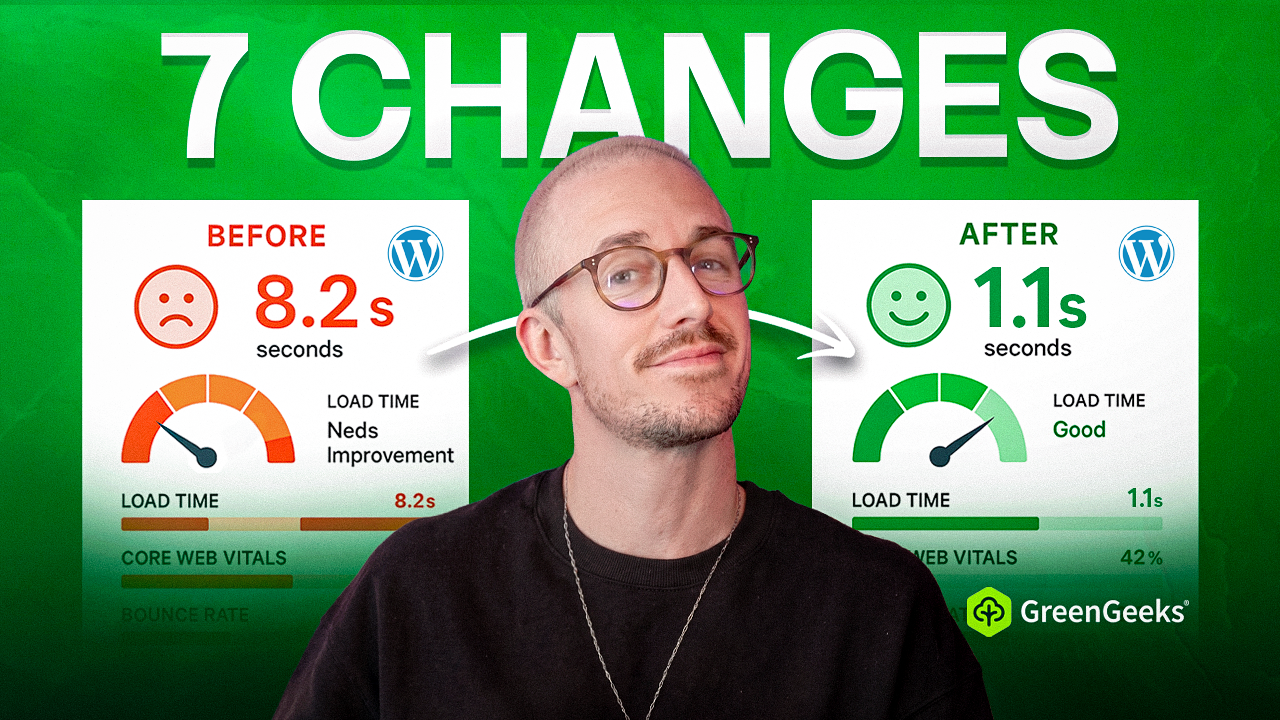
I took the very same web site, began with a light-weight theme, and did an entire WordPress velocity optimization experiment to chop its load time from about 4.5 seconds to below 1 second. I modified seven issues, however right here’s the factor that stunned me… the final change (switching my WordPress internet hosting to GreenGeeks) made the primary six fixes work 10x higher.
That’s why a lot recommendation on velocity up your web site feels underwhelming. You compress a couple of pictures, set up a plugin or two, and perhaps trim a bit bloat, however your web site nonetheless drags.
The repair isn’t doing extra random tweaks. It’s fixing the suitable bottlenecks in the suitable order. For a lot of, the ultimate step includes shifting to a correct WordPress internet hosting supplier that unlocks the true potential of your web site’s velocity optimization basis. Right here’s my full information:
Disclosure: Please observe that among the hyperlinks under are affiliate hyperlinks and at no extra price to you, I’ll earn a fee. Know that I solely suggest services I’ve personally used and stand behind. If you use one in every of my affiliate hyperlinks, the corporate compensates me, which helps me run this weblog and preserve my in-depth content material freed from cost for readers (such as you).
Key Takeaways for WordPress Velocity Optimization
- Most WordPress velocity optimization features come from fixing issues in the suitable sequence, slightly than merely putting in extra plugins.
- Begin by establishing a efficiency baseline in PageSpeed Insights or GTmetrix, so you realize precisely what’s slowing down your web site earlier than you alter something.
- Straightforward wins for a lot of websites embody picture optimization, eradicating outdated plugins, clearing put up revisions, and performing database optimization to take away junk recordsdata.
- Caching, deferred scripts, and a CDN could make your pages really feel a lot sooner, however these efforts solely work as much as a sure level.
- Internet hosting units the last word ceiling to your web site, and in case your server is weak, each different repair could have much less room to supply a significant influence.
Enhance Your WordPress Efficiency with GreenGeeks

Many WordPress velocity points are brought on by limitations on the server stage. GreenGeeks offers your web site a sooner basis with LiteSpeed, NVMe storage, and free web site migration.
Why Your WordPress Velocity Has a Ceiling
A gradual WordPress web site will not be at all times gradual due to one unhealthy plugin or a couple of outsized pictures. Generally the larger challenge is the inspiration beneath every thing. In case your server is weak, crowded, or underpowered, each request takes longer than it ought to, even after you will have accomplished the suitable optimizations.
The best method to image it’s this: consider web site velocity like stacking packing containers in a room. Picture compression, caching, lazy loading, script cleanup, and database cleanup all assist you to stack increased. However your host is the ceiling.
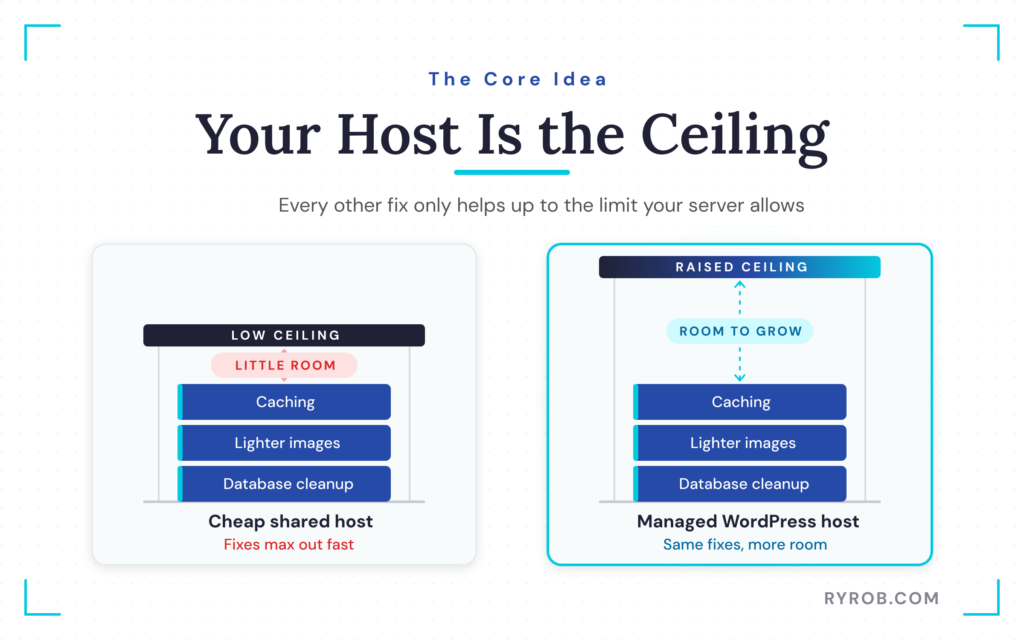
When you hit that ceiling, the little enhancements cease producing huge outcomes. You may increase it considerably by switching to managed WordPress internet hosting, which offers a extra sturdy infrastructure designed particularly for prime efficiency.
That’s the reason two websites can use the identical theme, plugins, and content material but really feel fully completely different. One is standing on a greater server. The opposite is caught on an inexpensive shared plan that can’t sustain.
If internet hosting is the bottleneck, each different tweak is working below a low ceiling.
Why Higher Internet hosting Can Multiply Each Different Enchancment
A sooner server doesn’t change the remainder of your optimization work. It makes that work rely extra.
Allow us to say you will have already resized your pictures, trimmed outdated plugins, and turned on caching. Good. But when the server nonetheless takes too lengthy to reply, the difficulty of poor server response time stays.
You’ll typically see this in efficiency reviews as a excessive Time to First Byte (TTFB). This metric highlights the delay earlier than the browser receives any knowledge out of your web site.
If you transfer that precise web site onto higher internet hosting, those self same optimizations hit more durable. Cached pages are served sooner. Database queries end sooner. PHP runs faster. Static belongings get pushed out with much less lag.
That’s the entire level.
It is usually why some folks spend a full weekend tweaking plugins and nonetheless find yourself disenchanted. They weren’t fixing the toughest restrict.
Begin With a Baseline Earlier than You Change Something
Earlier than touching a single setting, measure the positioning. This half will not be glamorous, nevertheless it saves quite a lot of wasted effort later.
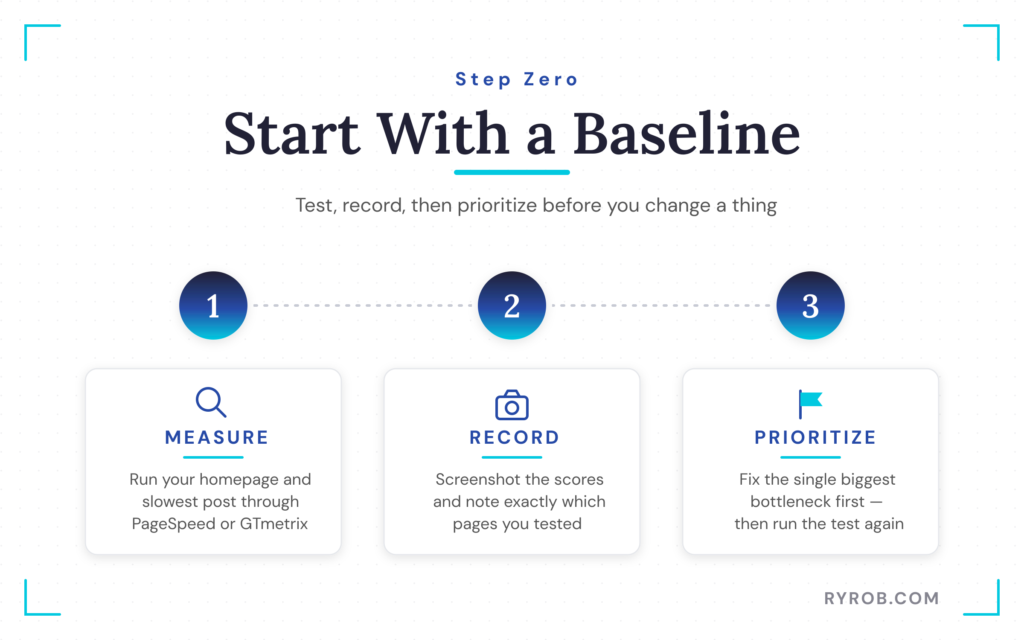
Run your homepage by PageSpeed Insights or GTmetrix. Then check a minimum of one content-heavy put up, ideally the slowest web page you will discover. It is usually very important to test your cellular web site velocity, as that is how the vast majority of your guests will expertise your content material.
If you would like a deeper walkthrough of learn these reviews, my Google PageSpeed optimization guide breaks down what every rating means and what to repair first.
You might be on the lookout for patterns, not perfection.
Ask questions equivalent to:
- Which pages are slowest?
- Are pictures too heavy?
- Is JavaScript blocking the web page?
- Is server response nonetheless excessive even after cleanup?
These solutions matter much more than obsessing over one quantity.
What Largest Contentful Paint, Interplay to Subsequent Paint, and Cumulative Structure Shift Imply
Google teams a couple of of crucial velocity indicators below Core Internet Vitals. If the technical acronyms make your eyes glaze over, right here is the straightforward model of how these metrics work.
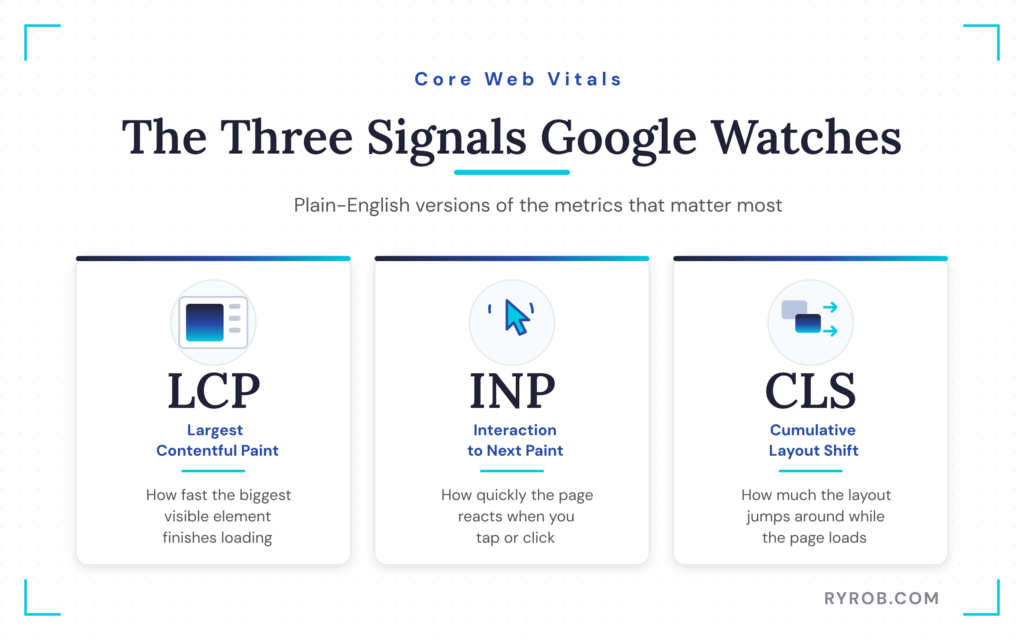
- Largest Contentful Paint (LCP) is how lengthy it takes the most important seen piece of the web page to indicate up. That’s typically your hero picture, featured picture, or a big block of content material. If that is gradual, the web page feels gradual.
- Interplay to Subsequent Paint (INP) measures how rapidly the web page reacts when somebody clicks, faucets, or sorts. On some testing instruments, additionally, you will see TBT, or Whole Blocking Time, which is a helpful lab sign when scripts are getting in the way in which.
- Cumulative Structure Shift (CLS) is the annoying impact the place a button, advert, or picture strikes whereas the web page is loading and you find yourself clicking the unsuitable factor.
Google’s Core Web Vitals documentation is useful if you need the official definitions. web.dev’s Web Vitals overview additionally offers a superb plain-English breakdown.
Discover the Slowest Web page on Your Website
Don’t check one random web page and name it accomplished. That’s how unhealthy efficiency hides.
Begin together with your homepage as a result of it’s typically the entrance door to your web site and one of many heaviest templates. Then check a protracted weblog put up with loads of pictures, embeds, or customized components. That’s normally the place the issues present up first.
If a single put up is dragging badly, it is actually because that web page exposes every thing without delay, equivalent to bloated pictures, too many scripts, gradual fonts, and cluttered structure recordsdata.
That’s excellent news as a result of fixing the worst web page tends to disclose the most important wins.
Why Screenshots and Notes Matter
Take screenshots of your scores earlier than you alter something. Write down the pages you examined too.
That turns the entire course of right into a clear before-and-after comparability. With out that baseline, it’s simple to make modifications, neglect what improved, and find yourself guessing.
I’ve seen this quite a bit with web site house owners who change ten settings in a single sitting, then can’t inform which one helped and which one broke the structure. A number of screenshots up entrance save quite a lot of backtracking later.
Repair Photographs, Plugin Bloat, and Different Straightforward Wins First
On most blogs, pictures are the heaviest aspect on the web page. They’re typically the first motive a web site feels sluggish, making efficient picture optimization important for enhancing your Core Internet Vitals.
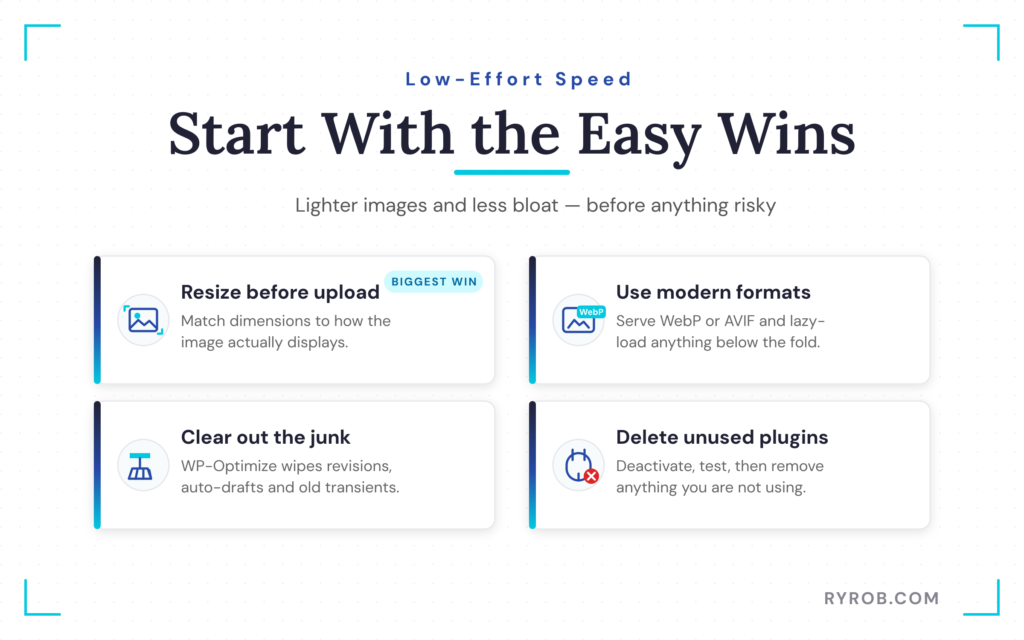
Then there are the same old WordPress leftovers: outdated put up revisions, auto-drafts, expired transients, and the plugin bloat that builds up from extensions you put in years in the past and subsequently forgot.
WordPress doesn’t clear that up for you. It retains gathering till you’re taking motion. That is the part the place you possibly can normally decide up some stable wins with out altering hosts or doing something dangerous.
Resize Photographs Earlier than You Add Them
In case your content material space is 800 pixels vast, importing a 4,000-pixel picture is wasted weight. The browser nonetheless has to cope with that outsized file, even when it solely shows a smaller model.
Resize pictures earlier than you add them. Match the scale to how they are going to really seem on the web page. That straightforward behavior cuts file dimension quick and retains your media library cleaner.
It’s a kind of fundamental fixes folks skip as a result of it feels too apparent. Don’t skip it. On quite a lot of websites, that is low-effort velocity.
Use Fashionable Codecs and Lazy Loading
The WebP format and AVIF are a lot lighter picture sorts than old-school JPEGs and PNGs in lots of instances. In case your web site remains to be serving heavy originals, you’re making pages work more durable than they should.
A plugin like WebP Specific can bulk-convert current pictures, which is beneficial if in case you have a big archive. For brand spanking new uploads, loads of instruments and workflows now assist trendy codecs by default.
Implementing lazy loading helps too. Photographs under the fold wait till the customer scrolls nearer to them. Meaning the web page can present helpful content material sooner as an alternative of loading each picture without delay.
Present WordPress variations deal with a lot of this by default, which is another reason to maintain WordPress up to date in your admin space.
Take away Outdated Revisions and Unused Plugins
Over time, WordPress can begin to really feel like a storage full of things you meant to type out later. Outdated revisions, auto-saves, expired transients, and plugins that had been meant to be momentary three redesigns in the past.
Run a database optimization with a software like WP-Optimize. That may filter out a shocking quantity of junk in a single cross.
Then audit your plugins and be ruthless.
Each energetic plugin can add:
- Scripts
- Kinds
- Database queries
In case you are not utilizing it, deactivate it, check the positioning, and if nothing breaks, delete it. Deactivated will not be the identical as deleted.
If you would like a wider shortlist of helpful instruments past velocity fixes, listed here are my best WordPress plugins.
Set Up Caching and Take away Render-Blocking Sources
Many tutorials counsel that you just set up a caching plugin, however that recommendation is as obscure as telling somebody to eat higher. It’s true, nevertheless it lacks the required course to get outcomes.
Caching works by answering person requests early. As a substitute of forcing the server to rebuild the web page from scratch each time, a cached model is served instantly. That’s sooner for the customer and reduces the load in your server.
Then there’s the difficulty of render-blocking assets. This contains CSS, JavaScript, and fonts that pressure the browser to pause earlier than displaying the web page.
When you have ever loaded a web site that sat clean for a second earlier than all of the sudden popping into place, you will have seen this efficiency bottleneck in motion.
Select One Good Caching Plugin
Begin with one stable caching plugin, not three.
LiteSpeed Cache is a strong possibility, particularly if you’re utilizing LiteSpeed internet hosting. WP Tremendous Cache is one other dependable alternative supported by the group behind WordPress.com. No matter your alternative, allow web page caching and browser caching first, then check your web site once more.
Web page caching shops a ready-made model of your web page. Browser caching instructs a customer’s browser to maintain sure recordsdata domestically as an alternative of re-downloading them on each go to.
Each strategies are simple wins for efficiency. A very powerful rule is to keep away from stacking a number of plugins which may battle with one another.
Tame CSS, JavaScript, and Fonts
Most high-quality plugins embody particular toggles that will help you handle your belongings extra successfully.
Frequent optimization settings embody:
- Minification to strip pointless whitespace from CSS and JavaScript recordsdata
- Deferring JavaScript so non-essential scripts load after seen content material
- Important CSS to assist web page kinds load sooner
- Font swapping settings to maintain textual content readable whereas customized fonts load
These changes assist optimize JavaScript execution and enhance the general person expertise. The web page feels snappier, which is what customers discover most.
All the time check one setting at a time. In case you apply each optimization without delay and the structure breaks, you’ll not know which one triggered the issue.
Change one setting, check it, then transfer on.
Use a CDN for Readers Far From Your Server
Your server is situated in a single place, however your readers are unfold throughout the globe.
In case your host is in america and somebody visits your web site from Australia, each picture, stylesheet, and font should journey a protracted distance. This creates actual latency and noticeable slowdowns.
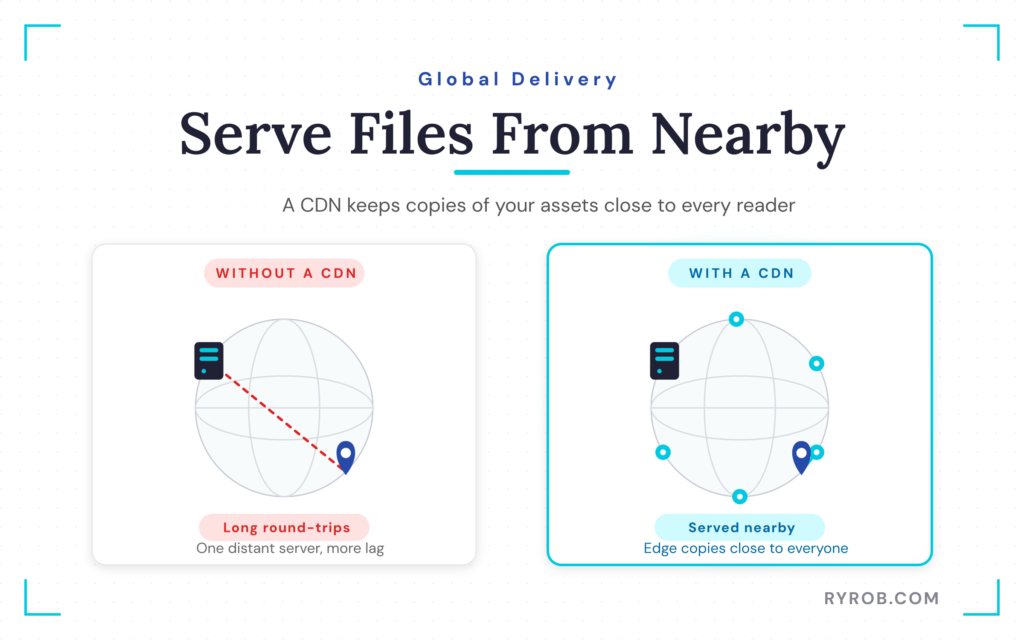
A Content material Supply Community (CDN) retains copies of your static recordsdata on servers world wide. Your customer receives belongings from a location nearer to them, which cuts delay and makes worldwide site visitors really feel a lot smoother.
Many internet hosting suppliers embody simple integration for these companies, and the free plan from Cloudflare is enough for a lot of websites. When you have readers exterior of 1 native space, utilizing this setup is nicely definitely worth the effort.
Increase the Internet hosting Ceiling With a Sooner Basis
That is the place the entire thing comes collectively.
You may clear up pictures, prune plugins, allow caching, defer scripts, and add a CDN. All good strikes. But when your web site nonetheless sits on an oversold, bargain-bin shared host, there’s a restrict to how a lot these modifications can do to your WordPress velocity optimization.
In my check, shifting the positioning to performance-optimized WordPress internet hosting with GreenGeeks was the change that unlocked the most important efficiency features.
Why LiteSpeed and Server-Stage Cache Matter
The largest piece is LiteSpeed.
With LiteSpeed hosting, web page caching occurs on the server stage with LSCache. That is far simpler than attempting to copy the identical performance by a plugin alone.
As a result of the server-level cache is nearer to the metallic, the server response time is considerably improved, permitting requests to be answered with far much less overhead.
GreenGeeks additionally makes use of:
These applied sciences assist the server learn, write, and course of knowledge a lot sooner. In addition they scale back repetitive database queries, resulting in a snappier expertise to your guests.
You don’t want to be a server skilled to profit from these specs. You merely discover that your web site hundreds faster.
That is the half most individuals really feel however can’t title. Similar web site, similar content material, similar optimizations, however a a lot better basis.
Why Dependable Uptime Issues as Visitors Grows
Velocity will not be solely about quiet days.
A bunch can really feel nice when site visitors is low, then disintegrate the second of your posts will get picked up someplace and visits spike. That’s when weak internet hosting exhibits its hand.
Pages decelerate, errors pop up, and the admin dashboard will get sluggish. All the pieces begins feeling fragile.
Dependable internet hosting issues as a result of a quick web site that can’t keep quick below stress will not be that helpful. In case your weblog is rising, this turns into a enterprise determination slightly than a minor technical choice.
That was a part of the attraction right here, too. The stack was not solely sooner on paper, it was constructed to carry up when actual site visitors exhibits up.
What to Count on From a Free Website Migration
In case you are already on WordPress, the concept of shifting hosts can really feel like a headache. That’s honest, as guide migrations are a ache if in case you have accomplished them earlier than.
GreenGeeks affords free site migration, which takes quite a lot of that friction out. As a substitute of rebuilding the positioning or exporting every thing by hand, their group handles the transfer for you.
In case you are ranging from scratch, additionally they have an AI web site builder that places a brand new web site on this similar sooner basis from day one. Plus, if the sustainability piece issues to you, their platform runs on renewable power too.
Three Velocity Errors That Waste Time
Numerous WordPress velocity work goes sideways for a similar causes. It isn’t as a result of the instruments are unhealthy, however as a result of the order is unsuitable or the settings get out of hand.
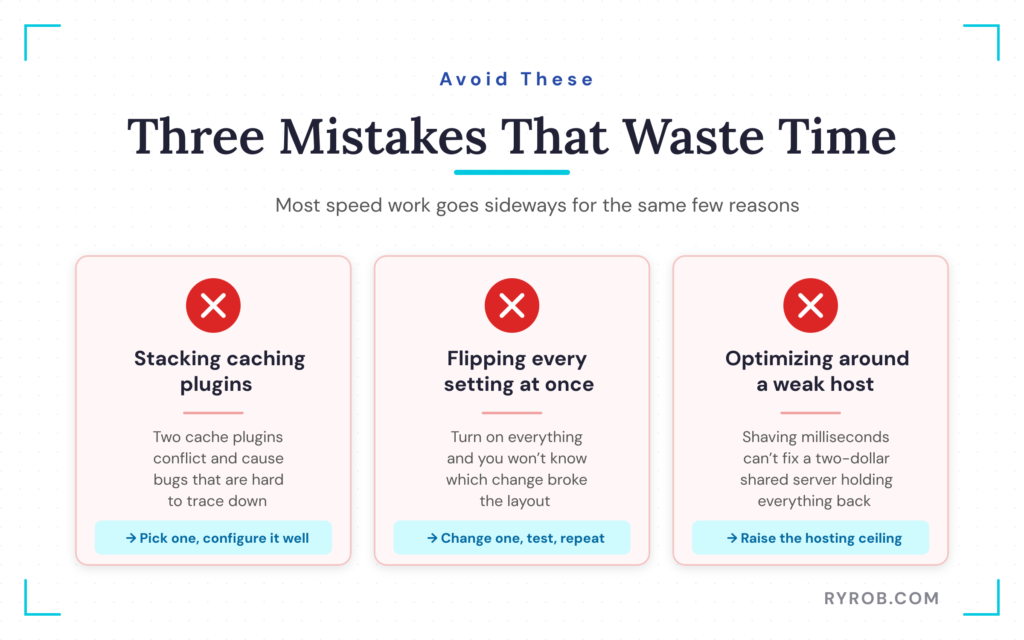
These are the three errors I see most frequently.
1. Don’t Stack A number of Caching Plugins
Extra will not be at all times higher in terms of web site efficiency. Putting in multiple caching plugin doesn’t imply extra velocity.
The truth is, a number of plugins can battle with one another, duplicate settings, and trigger odd bugs which are tough to trace down. Select one dependable caching plugin and set it up correctly. Easy beats messy right here each time.
2. Don’t Flip Each Setting at As soon as
It’s tempting to go full cleanup mode and activate each optimization toggle you will discover. Nevertheless, that’s the quickest method to break your web site. In case you blindly allow settings associated to JavaScript execution with out testing, you might be prone to set off errors that destroy the person expertise.
Change one factor, check the web page, and test cellular efficiency as nicely. Then transfer to the following change. This slower, extra boring course of is the one one which will get you steady velocity features with out wrecking your structure.
3. Don’t Optimize Round a Weak Host
In case you are spending hours shaving milliseconds off web page load instances whereas coping with plugin bloat, however you might be nonetheless hosted on a two-dollar monthly server, you might be working across the unsuitable drawback.
This doesn’t imply internet hosting is at all times the primary repair. It means internet hosting acts as a tough restrict as soon as the straightforward wins are accomplished.
In case your server response time stays stubbornly gradual after a radical cleanup, it’s time to cease sharpening the furnishings and begin wanting on the basis of your home.
FAQs About WordPress Velocity Optimization
Under are extra questions you may ask.
What’s the quickest win for many WordPress websites?
For lots of WordPress websites, picture optimization is the quickest win. Outsized uploads and outdated file codecs add weight quick, and resizing plus changing to trendy codecs could make a visual distinction with out a lot danger.
Plugin cleanup is one other simple one. A number of unused plugins and a few database junk can drag greater than folks count on.
Do I would like a caching plugin if my host already has server-level caching?
Sure, a caching plugin can nonetheless be helpful even when your host already offers server-level caching. In case your host offers robust server-level caching, which will deal with the heaviest lifting already.
A plugin can nonetheless assist with browser caching, minification, defer settings, database cleanup, and different front-end tweaks. You simply don’t want overlapping cache programs preventing one another.
Can plugins alone get a WordPress web site below 1 second?
Sure, plugins alone can typically get a WordPress web site below 1 second, however not reliably. If the host is already stable, plugins and web site cleanup can get you a good distance.
If the host is the gradual half, plugins can solely achieve this a lot. The host is accountable for your Time to First Byte, which units the inspiration to your whole loading expertise. That’s the reason the identical web site can really feel dramatically sooner after a internet hosting improve, even earlier than you alter anything.
How typically ought to I check my web site velocity?
It’s best to check your web site velocity earlier than making modifications, proper after making modifications, and any time you add one thing heavy like a brand new plugin, video embed, or redesign.
It is usually good to re-test after huge WordPress updates or internet hosting modifications. You also needs to pay shut consideration to your cellular web site velocity repeatedly, as efficiency can slip over time, particularly on websites that publish typically.
Closing Ideas on Optimizing WordPress Velocity
Going from 4.5 seconds to below 1 second wasn’t about discovering one magic plugin. It was about getting sincere in regards to the bottleneck, fixing the page-level points first, after which enhancing the inspiration beneath the positioning.
That’s the half price remembering. Photographs, caching, deferred scripts, and CDNs all matter. They simply matter extra when the server will not be holding every thing again.
By following this logical strategy to WordPress velocity optimization, you place your web site in the most effective place to persistently cross Core Internet Vitals assessments and ship a sooner expertise for guests.
Run the check, save the screenshot, and repair the most important drawback first. That’s the way you cease guessing and begin constructing a high-performance basis that makes your web site really feel quick for each customer.
And if you’re prepared to lift your ceiling by upgrading your WordPress velocity optimization from the internet hosting stage, be part of me over on GreenGeeks the place your web site routinely will get a speedy basis & you’re internet hosting with a real eco-friendly supplier.
Enhance Your WordPress Efficiency with GreenGeeks
Many WordPress velocity points are brought on by limitations on the server stage. GreenGeeks offers your web site a sooner basis with LiteSpeed, NVMe storage, and free web site migration.