Editor’s Observe: This story initially appeared on Monster.
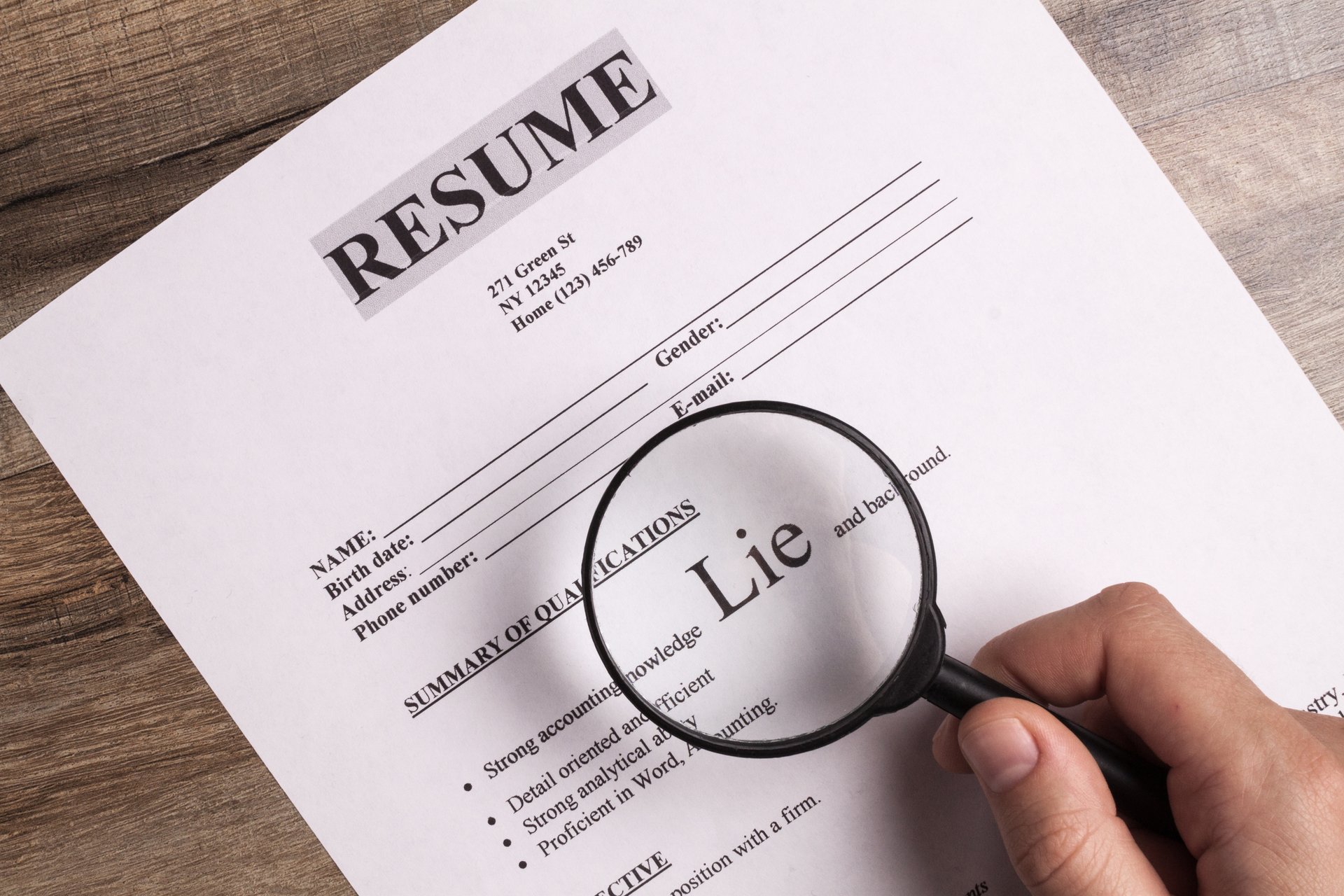
In the event you’ve ever questioned how intently employers really verify resumes, you’re not alone. Latest Monster analysis reveals many job seekers imagine verification is inconsistent and that perception is shaping how individuals current themselves in as we speak’s hiring market.
In line with Monster’s Credibility Hole Report, a nationwide survey of greater than 1,000 U.S. job seekers, 13% admit they’ve not too long ago lied or included deceptive data on a resume.
On the similar time, 56% imagine employers solely “typically” confirm resume particulars, and simply 20% suppose employers confirm particulars more often than not.
That mismatch creates a credibility hole: Job seekers assume checks are selective, really feel stress to “polish,” and typically cross the road between robust positioning and misrepresentation.
So what does this imply on your job search and how will you stand out with out risking your credibility?
Key findings
- Resume honesty isn’t common: 13% have not too long ago lied or included deceptive data on a resume.
- Most job seekers count on selective verification: 56% imagine employers solely confirm resume particulars among the time.
- AI is influencing resumes by means of modifying: 61% say they don’t use AI instruments, and people who do use them to refine language, formatting, or alignment.
- Polish is valued greater than it’s practiced: 76% say a refined LinkedIn headshot is vital, however most nonetheless use informal pictures.
Most job seekers count on spot checks, not full audits
Monster’s analysis suggests many candidates imagine resume verification is partial at finest:
- 20% say employers confirm resume particulars more often than not
- 56% say verification occurs typically
- 21% say it occurs hardly ever
- 3% say it by no means occurs
That notion issues. When verification feels inconsistent, some candidates take extra liberties with how they current dates, titles, or expertise, assuming these particulars could by no means be scrutinized.
However selective verification doesn’t imply no verification. Employers usually give attention to the main points that matter most to efficiency, particularly as soon as a candidate strikes deeper into the hiring course of.
The place resume grey areas have a tendency to point out up
Amongst job seekers who admit to deceptive data, Monster discovered essentially the most generally misrepresented areas embody:
- Dates of employment: 39%
- Obligations or scope: 39%
- Expertise or instruments proficiency: 35%
- Job titles: 33%
- Outcomes or metrics: 19%
- Schooling credentials: 15%
- Certifications: 7%
These aren’t normally outright fabrications. Extra usually, they mirror stretching timelines, inflating scope, or overstating proficiency, particularly when candidates really feel stress to compete.
AI is shaping resumes, however principally as an editor, not an writer
Regardless of issues about AI-written resumes, Monster’s knowledge reveals most job seekers are nonetheless doing the writing themselves. 61% say they don’t use AI instruments in any respect for resume writing or modifying.
Amongst those that do use AI, it’s primarily for refinement:
- Grammar and spell verify: 28%
- Rewriting or shortening content material: 22%
- Matching resumes to job descriptions: 20%
- Formatting or design assist: 19%
- Writing bullet factors: 16%
- Key phrase or ATS optimization: 12%
LinkedIn polish follows the identical sample
Presentation issues, however adoption lags behind perception. Monster discovered that 76% of job seekers say a refined LinkedIn headshot is vital, but most nonetheless depend on informal pictures:
What candidates imagine:
- Reasonably vital: 59%
- Extraordinarily vital: 17%
- Not vital: 24%
What candidates really use:
- Informal cellphone photograph (65%)
- Skilled headshot (22%)
- Actual photograph, AI-enhanced (8%)
- AI-generated picture from selfies (5%)
How one can stand out with out crossing the road
In the event you’re fearful about falling behind by being “too sincere,” Monster’s knowledge suggests a greater technique: readability, specificity, and proof.
What to do:
- Be exact about expertise and instruments. As a substitute of itemizing the whole lot, give attention to what you’ll be able to really use on day one.
- Use outcomes you’ll be able to clarify. Metrics matter most when you’ll be able to stroll by means of the way you achieved them.
- Body progress truthfully. It’s okay to point out development—so long as titles, dates, and scope align with actuality.
- Use AI as a reviewer, not a substitute. Let it enhance readability and alignment, not invent expertise.
- Assume verification could occur later, particularly for roles tied to compliance, seniority, or technical expertise.
Most job seekers need to be employed for his or her actual expertise, however stress can blur the road. Staying on the best facet of that line protects each your status and your long-term profession.
Credibility is a aggressive benefit
Monster’s analysis highlights a hiring surroundings constructed on selective belief. Job seekers imagine verification is inconsistent, and plenty of reply by optimizing their presentation, typically too far. However in a market the place employers are more and more targeted on match, expertise, and long-term efficiency, credibility itself turns into a differentiator.
The strongest candidates aren’t essentially the most polished; they’re essentially the most plausible.
To assist job seekers navigating these pressures, Monster has launched the Monster Resume Builder, a free software designed to assist candidates create polished, ATS-ready resumes in minutes with out crossing into misrepresentation.
Methodology
This survey was carried out by Pollfish on January 19, 2026, amongst 1,002 U.S. job seekers.
Respondents answered a collection of multiple-choice questions exploring resume-writing and modifying habits, AI use in resume improvement, perceptions of employer verification practices, and LinkedIn profile presentation.
The pattern included illustration throughout generations, with 17% Gen Z (born 1997 or later), 25% Millennials (born 1981–1996), 28% Gen X (born 1965–1980), and 31% Child Boomers (born 1946–1964). Respondents recognized their gender as 50% male and 50% feminine.